

Working as a self-employed stylist in a San Francisco rental salon gives you something most traditional salon jobs can’t offer: complete control over your business, your schedule, and your product choices. At Kosa Salon SF in the Marina District, stylists rent their own stations and run their businesses independently while working in a luxury salon environment. You get to choose your own backbar products, set your own prices, keep more of what you earn, and build direct relationships with your clients without splitting commissions or following someone else’s rules.
The rental model has become popular among experienced stylists in San Francisco who want the freedom of owning a business without the overhead costs of opening their own salon. You handle your own bookings, manage your own inventory, and decide which premium products like Kérastase or other professional lines work best for your clients. This setup works well if you already have a client base or strong marketing skills, but it also comes with responsibilities that traditional employment doesn’t require.
Understanding both the benefits and challenges of renting a station helps you decide if this path fits your career goals. The financial structure, daily workflow, and level of independence differ significantly from being an employee, and knowing what to expect makes the transition smoother.
Why Stylists Choose Rental Salons In San Francisco
Rental salons attract stylists who want to build their own brand and take home more of what they earn. The freedom to set prices and manage your own schedule often outweighs the stability of commission work for those ready to run their business.
Independence And Creative Control
When you rent a chair, you control every detail of your client experience. You choose your service menu, select your own products, and decide how to brand yourself. No salon owner tells you which color lines to use or what styles to promote.
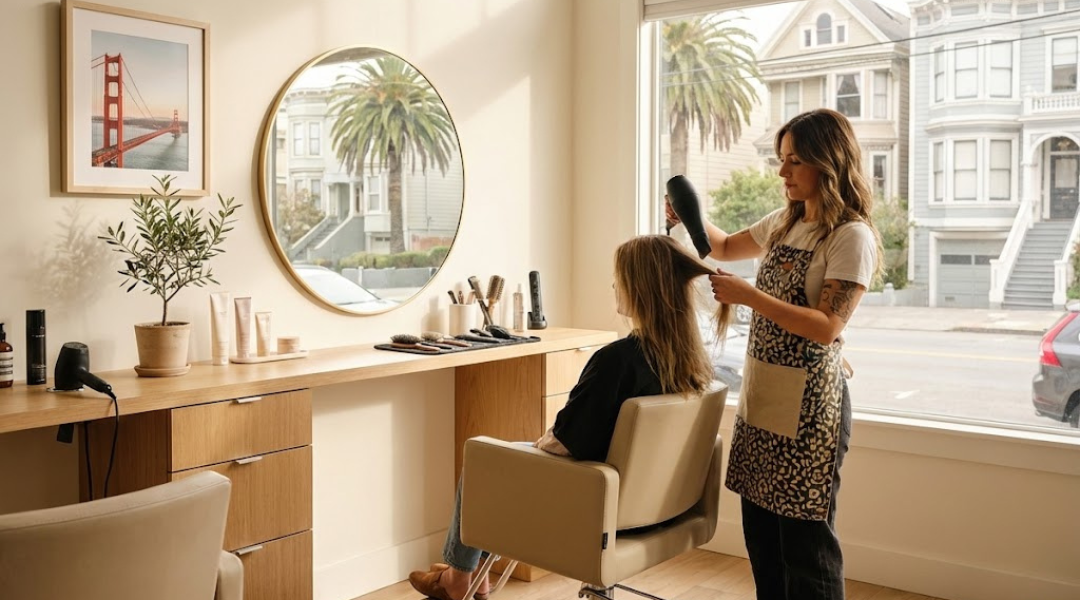
This independence extends to your workspace. You can decorate your station, play your own music, and create an environment that reflects your personality. Your clients come to see you, not the salon brand.
You also control your client relationships directly. You set your own booking policies, cancellation rules, and service standards. If you want to specialize in balayage or focus only on curly cuts, you make that call without needing approval.
In San Francisco’s creative market, this freedom helps you stand out. Clients often seek stylists with a distinct point of view, and rental setups let you build that identity without compromise.
Flexible Pricing And Scheduling
Rental models let you set rates that match your skill level and market position. If you want to charge $150 for a haircut or $400 for color, you keep the full amount after expenses. Commission stylists earn only a percentage of what the salon charges.
You also control your calendar completely. You can work mornings only, take Wednesdays off, or block out time for personal appointments. No manager assigns your shifts or requires weekend coverage.
This flexibility matters in a city where cost of living is high and personal time is limited. You can adjust your schedule around childcare, side projects, or continuing education without asking permission. If a slow week hurts your income, you can add hours or run a promotion. If you need a break, you close your books and step away.
The Perks Of Controlling Your Backbar
As a self-employed stylist at a San Francisco rental salon, you decide which products sit on your backbar and how you use them with each client. This control lets you build a service approach that matches your skills and your clients’ needs.
Choose Your Own Product Brands
You pick the exact brands and products that work best for your technique. No salon owner forces you to use products you don’t trust or believe in.
You can stock professional brands that deliver results you’re confident in. If a brand doesn’t perform well, you switch it out without asking permission. This freedom means you invest in products that actually improve your services.
Your product choices directly affect your profit margins. You negotiate your own prices with distributors and keep all the savings. When you find a great deal on backbar sizes or wholesale pricing, that money stays in your pocket.
You also control your inventory levels. Stock more of what you use frequently and skip products that sit unused. This prevents waste and keeps your costs predictable.
Personalize Client Experience
Your backbar becomes a tool for creating custom experiences. You can offer specialty treatments with unique products that other stylists in the building might not carry.
When a client has specific hair concerns, you select products tailored to their exact needs. You’re not limited to a standard salon menu. If someone needs a bond-building treatment or a specific scalp therapy, you add those products to your collection.
You can create signature scent experiences or treatment combinations that become part of your brand. Clients remember these personal touches. They know you chose these specific products for them, not because corporate required certain brands.
This customization builds loyalty. Clients return because they can’t get your exact service approach anywhere else.
Financial Benefits Of Being Self-Employed
Self-employment as a stylist at a rental salon like Kosa Salon SF puts more money in your pocket and gives you control over your business expenses. You keep what you earn after paying your booth rental, and you can take advantage of tax deductions that traditional employees cannot access.
Higher Earning Potential
When you rent a chair at Kosa Salon SF, you keep 100% of your service fees and tips after paying your fixed rental cost. There’s no commission split with a salon owner cutting into your income.

Your earning potential scales with your effort and skill. If you build a strong client base and raise your prices, all that extra income goes directly to you. You can also add retail sales, upsells like treatments, and specialty services without sharing profits.
Your income depends on:
- Your pricing structure
- Number of clients you book
- Services you offer
- Retail products you sell
You control your schedule, which means you can work more hours during busy seasons or take time off without asking permission. This flexibility lets you maximize earnings when demand is high and adjust when you need a break.
Simple Breakdown Of Costs Vs Take-Home
Your main expense is your monthly booth rental at Kosa Salon SF, which remains fixed regardless of how much you earn. Beyond that, you pay for your supplies, tools, and products.
| Monthly Expenses | Typical Range |
|---|---|
| Booth rental | $800-$1,500 |
| Products/supplies | $200-$400 |
| Liability insurance | $20-$50 |
| Marketing | $50-$200 |
If you charge $80 per haircut and see 60 clients monthly, you earn $4,800. After paying approximately $1,500 in expenses, you take home $3,300. As an employee, that same $4,800 in services would typically result in only $2,400-$2,880 take-home after a 40-60% commission split.
You also benefit from tax deductions on business expenses like supplies, continuing education, and a portion of your phone and internet bills. These deductions reduce your taxable income, which means you keep more of what you earn compared to traditional employment where these costs come from after-tax dollars.
What A Rental Station At Kosa Salon SF Includes
Renting a station at Kosa Salon SF means you get access to professional equipment and amenities while maintaining control over your business. The salon provides the infrastructure and tools you need, while you bring your personal products and expertise.
What The Salon Provides
Your rental station comes fully equipped with a hair styling chair, washing station, and salon tray. You’ll have locking drawers for secure storage, an electrical drawer for your tools, and a locking color cabinet. Extra storage space is available for your supplies.
The salon includes all styling products from Kerastase, L’Oreal, and Layrite. You’ll have access to a full back-bar stocked with Kerastase and Davines products. Clean towels and client robes are provided for every appointment.
Your weekly rent covers Vagaro salon software, receptionist services, and 24/7 access with a personal key fob. The cleaning crew handles weekly maintenance. Climate control, music, Wi-Fi, and TV are included.
Additional amenities include photo backdrop with lighting, private changing rooms, a client waiting room with refreshments, two bathrooms, and a staff break room with kitchen appliances. You also get one free week of vacation and commission on retail sales.
What Stylists Bring
You need to bring your professional cutting tools, including scissors, clippers, and razors. Your personal styling tools like blow dryers, flat irons, and curling irons are your responsibility.
You’ll want to bring any specialty products you prefer to use that aren’t included in the salon’s existing product lines. This allows you to maintain your unique service offerings and brand identity. Your business cards, appointment book or digital scheduling preferences, and any marketing materials are yours to provide.
You’re responsible for building and maintaining your own client base. Your pricing structure, service menu, and scheduling are under your control.
Day-To-Day Workflow And Client Management
Managing your own schedule and client relationships gives you direct control over your income and professional reputation. You decide how to balance appointments, handle bookings, and keep clients coming back.
Booking Systems And Schedule Control
You need a reliable booking system that works on your terms. Many self-employed stylists at rental salons use platforms like Vagaro, Square Appointments, or Booksy to manage their calendars independently.
These systems let you set your own hours and block off time when needed. You can adjust appointment lengths based on the services you offer. A single-process color might take 90 minutes, while a full highlight and cut could need three hours.
Key scheduling features to look for:
- Online booking that syncs with your phone
- Automated reminder texts to reduce no-shows
- Payment processing built into the system
- Client history and formula notes in one place
You control your pricing structure completely. Some stylists charge flat rates while others use variable pricing based on actual product usage and time. Apps like SalonScale can track exact product costs per service if you want precise pricing data.
Your backbar inventory stays in your hands too. You order what you need, store it in your space, and track supplies on your schedule.
Marketing And Retention Basics
Building your client base requires consistent effort outside of service hours. Social media accounts, especially Instagram, serve as your digital portfolio where potential clients discover your work.
Post before-and-after photos regularly with clear descriptions of techniques used. Reply to comments and direct messages quickly to capture interest while it’s fresh. Your response time often determines whether someone books with you or moves on.
Simple retention strategies that work:
- Send birthday discounts or anniversary messages
- Keep detailed formula cards for every color service
- Ask for reviews after appointments
- Offer referral incentives to existing clients
Client management software stores contact information and service history in one place. You can see when someone is overdue for a visit and send a friendly reminder. Regular clients who come every six to eight weeks form the foundation of a stable income.
Downsides To Consider And How To Manage Them
Self-employment at a rental salon brings financial responsibilities and the loss of traditional employment benefits. Planning ahead and creating systems for these challenges will help you build a stable business.
Startup Costs And Supplies
You’ll need money upfront to stock your backbar and purchase professional tools. Basic supplies include shampoo, conditioner, styling products, color lines, and treatment formulas for different hair types.
The initial investment typically ranges from $2,000 to $5,000 depending on the services you offer. Color specialists need more products than stylists who focus only on cuts. You’ll also need to buy your own scissors, combs, blow dryers, flat irons, and other equipment.
Budget for these essentials:
- Professional shears and cutting tools
- Heat styling equipment
- Color mixing supplies and bowls
- Backbar products in bulk sizes
- Capes, towels, and sanitation supplies
Track your product usage weekly to avoid waste and overspending. Buy backbar sizes when possible since they cost less per ounce than retail bottles. Set aside 10-15% of your revenue each month to restock supplies before you run out.
No Employee Benefits
You won’t receive health insurance, paid time off, or retirement contributions from an employer. Every day you don’t work means no income, including sick days and vacations.
Research health insurance options through Covered California or professional associations that offer group rates. Set up a separate savings account and transfer 20-30% of each payment you receive. Use this money to cover taxes, retirement savings, and time away from work.
Consider disability insurance to protect your income if an injury prevents you from working. Many stylists also build an emergency fund covering three to six months of expenses. This cushion gives you financial security during slow periods or unexpected situations.
How To Get Started At Kosa Salon SF
Getting started at Kosa Salon SF requires reaching out for a tour and understanding what you need to join the team. The salon works with independent stylists who rent chairs and set their own prices.
What To Ask On A Tour
Contact Kosa Salon SF at 415-374-7026 to schedule your tour of the Marina District location at 3012 Fillmore Street. During your visit, ask about the rental rates and what’s included in your chair fee.
You should find out about the backbar setup and whether you need to bring your own products or if certain items are shared. Ask about the salon’s hours of operation, which are Monday through Sunday from 9 AM to 7 PM.
Find out how booking works for independent stylists. Some salons handle appointments centrally while others let you manage your own schedule. Ask about the clientele in the Marina District and what services are most popular.
You’ll want to understand the space available, including whether stations have good lighting and storage for your tools. Ask if there are any restrictions on the products you can use or services you can offer.
Requirements To Apply
Kosa Salon SF looks for experienced hair stylists and barbers who are ready to work independently. You need an active cosmetology or barbering license that’s valid in California.
The salon opened in 2023 and was founded by experienced professionals, so they expect you to have a solid background in hair services. You should be skilled in areas like cutting, coloring, extensions, or men’s grooming.
Since you’ll set your own prices and manage your own business within the salon, you need to be comfortable with the business side of styling. This includes scheduling clients, handling payments, and marketing yourself.
New customers can call or text 415-374-7026 to inquire about joining the team. Be ready to discuss your experience, specialties, and what you’re looking for in a salon rental arrangement.


