Renting a barber station in San Francisco means stepping into one of the most competitive beauty markets in the country. The amenities your rental space includes directly affect your ability to attract high-paying clients, maintain efficiency, and build a sustainable business. Many barbers focus solely on location and price, but the equipment and features at your station determine whether you’ll thrive or struggle.
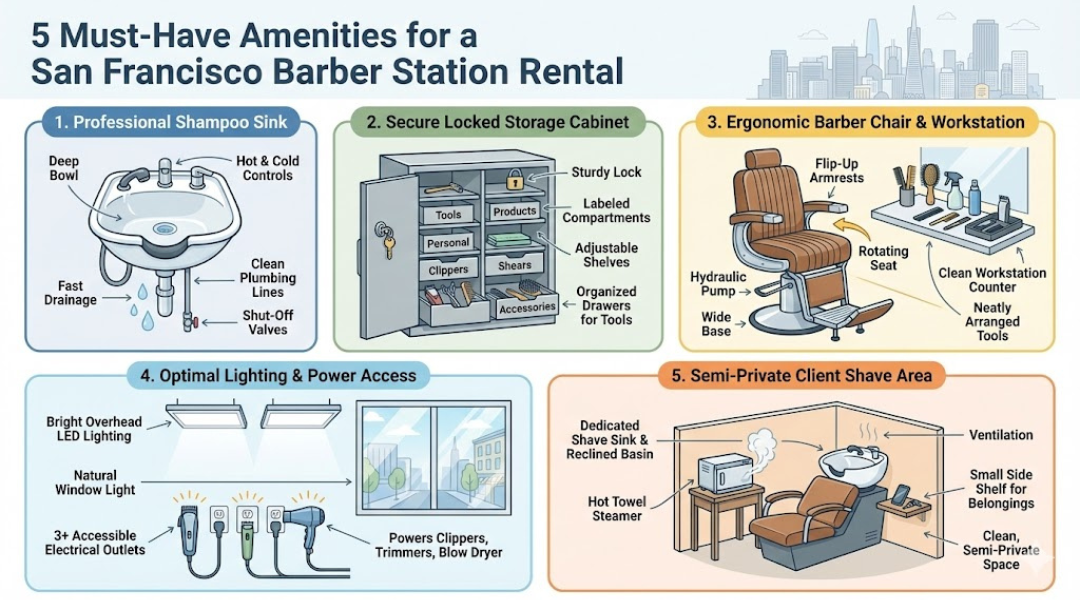
Your barber station rental should include professional-grade hydraulic chairs, ample electrical outlets with proper spacing, quality lighting systems, secure storage with locking mechanisms, and immediate access to plumbing for shampoo services. These five amenities separate functional workspaces from setups that force you to compromise on service quality or client comfort. In San Francisco’s Marina District and surrounding neighborhoods, clients expect a premium experience that matches the city’s elevated standards.
This guide walks you through exactly what to look for when touring potential barber station rentals, how to calculate the real return on studio-grade amenities, and specific considerations for working in San Francisco’s unique market. You’ll learn to spot common red flags during facility tours and understand which features justify higher rental rates versus which are just marketing tactics.
Quick Checklist: The 5 Must-Have Amenities
A barber station rental in San Francisco needs more than just floor space and a mirror. You need functional plumbing access, secure storage for your tools and products, quality equipment that supports long work days, proper lighting with enough power outlets, and a clean area where clients feel comfortable during services.
Professional Shampoo Sink and Plumbing Access
Your station needs reliable access to hot and cold running water. A professional shampoo sink lets you wash client hair before cuts and handle color services properly.
Check if the sink has adjustable water pressure and temperature controls. You’ll use this sink multiple times per day, so it needs to drain quickly without backing up. The plumbing should be in good condition with no leaks or rust.
Key features to verify:
- Hot water reaches proper temperature within 30 seconds
- Sink bowl is deep enough to prevent splashing
- Drain works without standing water
- Clean, accessible shut-off valves
Some San Francisco locations share sinks between multiple stations. Make sure you understand the setup before signing your rental agreement.
Secure, Labeled Storage and Locked Cabinet Space
You’ll bring clippers, shears, combs, styling products, and other supplies worth hundreds or thousands of dollars. Your rental station must provide locked storage to protect your investment.
Look for cabinets with sturdy locks and enough space for your full kit. You need separate areas for clean tools, used tools, and products. Drawer space helps you organize smaller items like guards, clips, and razors.
The storage should be clearly labeled with your name or station number. This prevents mix-ups with other barbers who rent nearby stations. Cabinet interiors should be clean, dry, and free of pest issues.
Plan for at least 3-4 cubic feet of locked storage space minimum. Check if shelves are adjustable so you can customize the layout for your specific tools and products.
High-Quality, Ergonomic Barber Chair and Workstation
Your barber chair is where you’ll spend 6-10 hours per day. A quality hydraulic chair with smooth height adjustment protects your back and shoulders from strain.
The chair should rotate 360 degrees without sticking or squeaking. Test the hydraulic pump to make sure it lifts smoothly and holds position without slowly sinking. Check that the footrest is stable and the headrest adjusts easily.
Your workstation counter needs enough surface area for tools, products, and styling implements. The height should let you work comfortably whether standing or using a stool. Look for surfaces that resist water damage and clean easily.
Essential chair features:
- Wide base for stability
- Easy-to-clean upholstery without rips
- Arm rests that flip up
- Weight capacity of at least 300 pounds
Reliable Lighting and Dedicated Electrical Outlets
Poor lighting makes precision cuts nearly impossible. You need bright, even overhead lighting that shows hair texture and detail clearly.
Natural light from windows helps but shouldn’t be your only source. Look for stations with LED or fluorescent fixtures that produce at least 500 lumens. The light should come from multiple angles to eliminate shadows on the client’s head and face.
You’ll plug in clippers, trimmers, blow dryers, and possibly phone chargers. Your station needs at least three dedicated electrical outlets that won’t trip the breaker when you run multiple tools. Outlets should be easily accessible without extension cords running across walkways.
Test the outlets before committing to the space. Bring your clippers and run them for a few minutes to check for power drops or flickering lights.
Clean, Private Client Area and Professional Sink for Shaves
Your clients need to feel comfortable and relaxed during their service. The station area should be visually separated from other workspaces to create a sense of privacy.
A professional sink dedicated to your station is essential if you offer straight razor shaves or beard trims. This sink should have a reclined basin that lets clients lean back comfortably. Hot towel steamers need to be nearby and fully functional.
The floor around your station must be easy to sweep and keep free of hair. Tile or sealed concrete works better than carpet. Check for proper ventilation since product fumes and hair particles build up quickly in enclosed spaces.
Your client should have a place to set their phone, keys, and drinks safely. A small side table or shelf within arm’s reach adds to their comfort during longer services.
Why Each Amenity Matters for Your Business
The right amenities at your barber station rental directly impact your income and professional reputation. Each feature plays a specific role in keeping clients happy, completing services faster, and meeting San Francisco’s strict health requirements.
Client Experience and Retention
Your clients notice every detail when they sit in your chair. A station with good lighting helps them see their haircut clearly in the mirror and builds trust in your work. Comfortable seating keeps them relaxed during longer services like detailed fades or beard grooming.
Storage space matters because clients want their belongings secure and nearby. A station with built-in storage or hooks eliminates the awkward moment when clients look for a place to put their bags or jackets. Temperature control affects comfort too, especially during San Francisco’s unpredictable weather shifts.
The overall atmosphere you create determines if clients book again. Stations with charging ports for phones show you care about convenience. Clean, modern equipment sends a message that you take your craft seriously. These small touches separate your service from competitors and turn first-time clients into regulars who refer their friends.
Speed and Efficiency During Peak Hours
Your ability to serve more clients depends on how your station is set up. Well-organized tool storage keeps clippers, scissors, and guards within arm’s reach. You waste less time searching for equipment between clients.
Key efficiency factors:
- Accessible power outlets for multiple tools
- Proper counter space for products and tools
- Easy-to-clean surfaces that speed up turnover
- Good water access for neck strips and cleaning
Peak hours bring the most money, but only if you can handle the volume. A station with ample workspace lets you prep your next service while wrapping up the current one. Efficient cleanup between clients means shorter wait times and more appointments per day.
Health, Safety, and Sanitation Compliance
San Francisco requires strict adherence to barbering health codes. Your station must have surfaces that can be properly disinfected after each client. The California Board of Barbering and Cosmetology inspects salons regularly and violations can result in fines or license issues.
Proper ventilation at your station protects both you and your clients from chemical fumes and hair particles. Good airflow reduces health risks during long shifts. Adequate lighting helps you spot missed spots and ensures precision cuts.
Your station needs designated areas for clean versus used tools. Cross-contamination risks decrease when you have separate storage for sanitized equipment. Stations with built-in sanitization stations or nearby access to disinfectant solutions make compliance easier and faster between clients.
How to Inspect a Barber Station on a Tour
When you tour a barber station rental, you need to test everything before signing a lease. Check the plumbing, electrical outlets, storage space, and overall cleanliness to avoid surprises later.
Quick Plumbing and Sink Test Checklist
Turn on both hot and cold water taps at the sink. Let the water run for at least 30 seconds to check the pressure and temperature. The hot water should reach a comfortable temperature within two minutes.
Check under the sink for any signs of leaks or water damage. Look for stains, rust, or moisture on the pipes and cabinet floor. Ask when the plumbing was last inspected or repaired.
Test the drain by filling the sink halfway and letting it empty. The water should drain smoothly without backing up or making unusual noises. Slow drainage often means clogged pipes that need professional attention.
Look at the faucet handles and spray attachments. They should move easily without sticking or wobbling. A loose faucet can waste water and create problems during client services.
How to Test Lighting, Outlets, and Wi-Fi
Bring your phone charger to test every outlet at the station. Plug it in and confirm that each outlet works properly. You need at least three working outlets for clippers, trimmers, and phone charging.
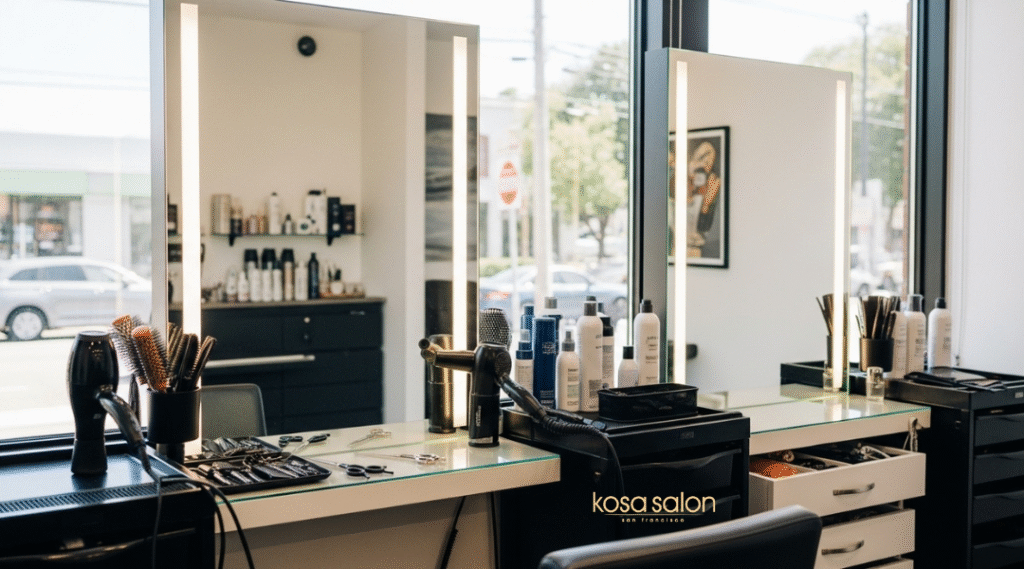
Stand at the barber chair and check the lighting from different angles. The light should be bright enough to see hair texture and detail clearly without creating harsh shadows on your client’s face. Natural light mixed with overhead lighting works best.
Ask for the Wi-Fi network name and password. Test the connection speed by loading a video or checking your email. Reliable internet matters for appointment booking, payments, and playing music for clients.
Check if the station has adjustable lighting options. You may need dimmer switches or additional lamps for different services and times of day.
What to Check for Storage, Security, and Cleanliness
Open all drawers and cabinets to inspect the storage space. You need enough room for clippers, scissors, combs, styling products, and cleaning supplies. Drawers should slide smoothly without sticking.
Look for a lockable drawer or cabinet where you can secure expensive tools and personal items. Ask about security cameras in the salon and who has access to keys. Find out if other barbers have had theft issues at this location.
Examine the station surface for stains, scratches, or damage. Run your hand along the edges to check for sharp spots or peeling laminate. The mirror should be clean and free of cracks or distortion.
Check the floor around the station for old hair clippings or product buildup. A dirty station means the salon may not maintain proper cleaning standards between renters.
Cost and ROI of Studio-Grade Amenities
Investing in quality amenities for your barber station rental requires upfront costs, but these expenses can pay for themselves through increased revenue and client retention. Better equipment and features let you charge more per service while keeping clients coming back.
Typical Incremental Cost vs Expected Revenue Lift
Studio-grade amenities in San Francisco typically add $200 to $500 per month to your base rental cost. This includes high-end styling chairs, professional lighting, and premium product storage.
The revenue lift from these amenities can reach 20-30% of your current income. A barber charging $50 per cut who serves 100 clients monthly earns $5,000. With better amenities, you can raise prices to $55-60 and attract 10-15% more clients. This brings your monthly income to $6,050-6,900.
Your break-even point happens within 2-3 months of the upgrade. After that, the extra revenue becomes pure profit. Most barbers see full ROI within the first quarter.
Examples: Faster Turnovers, Upsell Opportunities, Higher Ticket Pricing
Premium amenities speed up your service times by 5-10 minutes per client. Better lighting helps you work faster and more accurately. Quality chairs position clients properly the first time.
These time savings let you serve 1-2 extra clients per day. That adds up to 20-40 more appointments monthly, generating $1,000-2,000 in additional revenue.
Better amenities also create natural upsell moments. A well-lit mirror helps clients notice gray coverage needs. Quality product displays encourage retail purchases. Private suites with soundproofing make clients comfortable discussing premium services like scalp treatments or beard care packages.
Higher-end spaces justify premium pricing immediately. Clients expect to pay $10-15 more in a professional suite with modern equipment compared to a basic station.
Kosa Salon SF Specifics and Local Considerations
Renting a barber station in San Francisco means understanding local regulations, accessing your workspace easily, and knowing what your salon provides. Kosa Salon SF handles many operational details, but you should verify specific requirements for your business.
San Francisco Code and Health Requirements to Confirm
San Francisco requires barbers to hold a valid California barbering license issued by the Board of Barbering and Cosmetology. You need to keep your license current and displayed at your station.
The city enforces strict health and safety codes for all barbering operations. Your station must meet sanitation standards for tools, surfaces, and waste disposal. You’re responsible for maintaining proper disinfection protocols between clients.
Check if you need a separate business license to operate as an independent contractor in San Francisco. The requirements vary based on your business structure and income level.
Kosa Salon SF maintains facility-level permits, but you should verify what documentation you need personally. Ask about their protocols for inspection readiness and how they support compliance.
Neighborhood Parking, Transit, and Client Access
Kosa Salon SF sits at the corner of Fillmore and Union Street in the Marina District. This location is in the Cow Hollow area, surrounded by shops and restaurants.
Transportation Options:
- Public Transit: Multiple Muni bus lines serve the area
- Street Parking: Metered spots available but can be limited during peak hours
- Parking Garages: Several options within walking distance
- Bike Access: The neighborhood is bike-friendly with nearby racks
The Marina District attracts affluent residents and tourists. Your clients can easily walk from nearby Pacific Heights or other neighboring areas.
Heavy foot traffic on Union Street means good walk-in potential. The salon operates in a busy retail corridor with high visibility.
How Kosa Supports Barbers: Supplies, Waste Disposal, and Maintenance
Kosa Salon SF provides high-end styling products at each station. You get access to Kerastase, L’oreal, Layrite, and Davines products without additional cost.
The receptionist helps with laundry services for towels and client robes. A weekly cleaning crew handles general salon maintenance and deep cleaning.
Included Support Services:
- Vagaro salon software for booking and payments
- Waste disposal and recycling management
- Heating and air conditioning maintenance
- Music and WiFi systems
- Client refreshment restocking
You get locking drawers and cabinets for secure storage of your personal tools and supplies. The salon provides a color utility room with proper ventilation and equipment.
The facility includes two bathrooms and a staff break room with kitchen appliances. These shared spaces are maintained by the salon’s cleaning service.
How to Apply and What to Bring
Applying for a barber station rental requires preparation and organization. You need to gather specific documents, ask the right questions during your visit, and understand the trial options available to you.
Documents and Portfolio to Prepare
You should bring proof of your California barbering license and current liability insurance. Most San Francisco rental spaces require both before you can start working.
Your portfolio matters when meeting with salon owners. Include clear photos of your best haircuts, beard trims, and styling work. Digital portfolios work well, but physical photo books can make a strong impression during in-person meetings.
Prepare professional references from previous employers or clients who can speak to your work quality and reliability. You may also need to provide identification, tax documents, and banking information for rental agreements.
If you have a client list or social media following, bring evidence of this. Station owners want to see that you can fill your chair and contribute to the salon’s atmosphere.
Questions to Ask During the Walkthrough
Ask about what amenities are included in the rental price at Kosa Salon SF. Find out if the station comes with storage space, access to product dispensaries, and whether utilities are covered.
You need to understand the rental terms clearly. Ask about the monthly rate, deposit requirements, and what happens if you need to end the agreement early. Check if there are additional fees for credit card processing or supplies.
Important questions to cover:
- What are the available hours and days for your station?
- Is there a receptionist, or do you handle your own bookings?
- Can you display retail products at your station?
- What are the policies for guests and walk-ins?
- How does parking work for both you and your clients?
Trial Day Option and Short-Term Rental Terms
Many barber station rentals in San Francisco offer trial days or week-long tests. This lets you experience the space and see if the location works for your business before committing to a long-term lease.
Ask if Kosa Salon SF provides short-term rental options. Some salons offer month-to-month agreements, which give you flexibility as you build your client base. These arrangements typically cost slightly more than long-term commitments but reduce your risk.
During a trial period, pay attention to foot traffic, the client atmosphere, and how well the station meets your daily needs. Test the lighting at different times of day since this affects your cutting precision. You should also gauge whether the salon’s existing clientele matches your target market.
Common Deal Breakers and Red Flags
Some issues with a barber station rental can’t be fixed with good intentions or creative workarounds. Problems with plumbing, electrical systems, storage space, and contract terms can disrupt your business and cost you money.
Poor Drainage, Weak Lighting, or Overloaded Circuits
A sink that drains slowly or backs up during busy hours will delay appointments and frustrate clients. Test the drainage before you commit. Run water at full pressure for several minutes and watch how quickly it clears.
Lighting problems affect your ability to do quality work. You need bright, consistent light at your station to see hair texture and cut precision. Natural light helps but shouldn’t be your only source. Check if overhead fixtures provide enough coverage or if you need to bring your own lamps.
Electrical problems show up when you plug in clippers, trimmers, and blow dryers at the same time. Old buildings in San Francisco often have circuits that can’t handle multiple tools running together. Ask the landlord about the electrical capacity. Find out if other renters have experienced power issues. Breakers that trip during a haircut are unacceptable.
Insufficient Storage or Unclear Security Rules
You need secure space for your clippers, shears, styling products, and towels. A single drawer or small cabinet won’t work if you offer multiple services. Ask about locked storage options before you sign anything.
Security policies matter when expensive tools are involved. Find out who has keys to the space. Check if the building has cameras or an alarm system. Some salons let anyone walk in during business hours. Others require key card access.
Your equipment represents a significant investment. A $500 clipper set or $800 shear collection needs protection. If the rental space can’t guarantee basic security measures, you’re taking an unnecessary risk.
Hidden Fees and Unclear Cancellation Terms
Read your rental agreement carefully before signing. Some landlords charge for utilities, cleaning services, or equipment maintenance that wasn’t mentioned during the tour. Get all fees in writing upfront.
Cancellation terms protect both parties but need to be clear. A 30-day notice is standard. Anything longer ties you to a space that might not work for your business. Ask what happens if you need to leave early.
Watch for automatic renewal clauses that extend your contract without warning. You want flexibility as your business grows. Some agreements include penalty fees for breaking a lease. Know these costs before you commit. A good landlord will explain every charge and term without hesitation.